Essential Accessories
How to Choose a Timeless Watch Without Overpaying
Case size, movement, strap and dial — the four decisions that matter when buying a watch you intend to wear for twenty years.
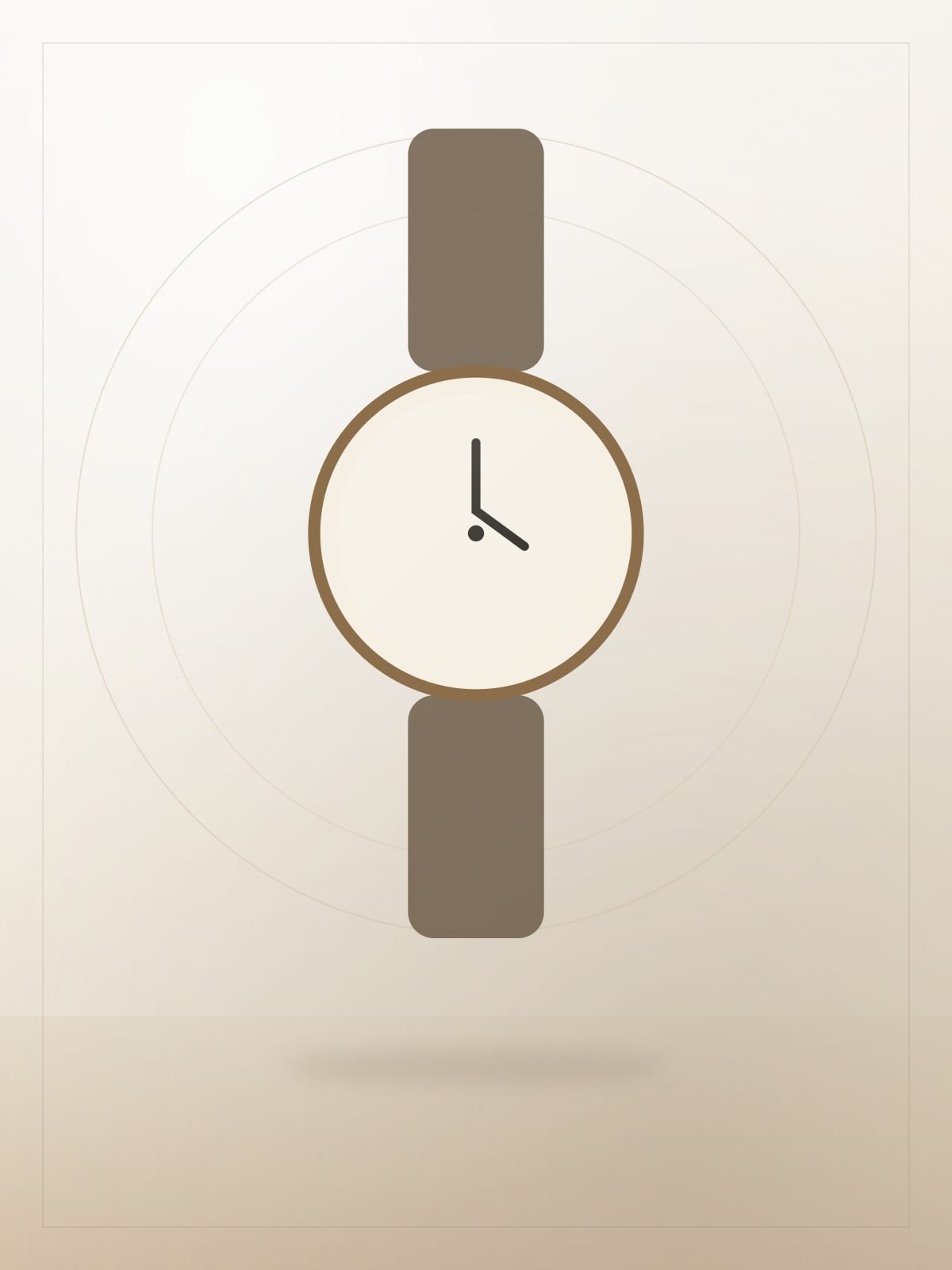
A watch is the only accessory most people wear every single day, which makes it the one worth thinking about properly. It is also the category where it is easiest to spend three times what the object is worth.
Four decisions determine whether a watch will still look right in twenty years. None of them is the brand.
1. Case size: smaller than the internet suggests
The current default — 40 to 42mm — is large for most wrists, and it is a fashion of the last two decades rather than a rule. Classic dress watches were 33 to 36mm for most of the twentieth century, and they read as elegant rather than small.
A practical test: the lugs, the little horns where the strap attaches, should not extend past the edge of your wrist. If they do, the watch is too big, whatever the number says.
- Wrists under 16cm: 34 to 36mm
- 16 to 18cm: 36 to 38mm
- Over 18cm: 38 to 40mm
A smaller case also wears better under a shirt cuff, which matters more than most people expect.
2. Movement: quartz is not a compromise
Mechanical movements are beautiful and unnecessary. A quartz watch is more accurate, needs a battery every two or three years, and costs a fraction as much to service.
Choose mechanical if you want the object to have a heartbeat and you are willing to pay for maintenance. Choose quartz if you want a watch that simply tells the time. Neither choice is a statement about you.
What to avoid is the middle ground: a cheap mechanical movement in an expensive case. It will be less accurate than a ten-dollar quartz and cost more to fix than it is worth.
3. Dial: legibility beats decoration
A timeless dial has three properties:
- High contrast. Dark hands on a light dial, or the reverse. Not grey on grey.
- Restrained markers. Applied batons or simple numerals. Avoid anything that requires reading glasses to interpret.
- No date window, or a well-placed one. Date windows are useful and often badly integrated. A date at 4:30 that cuts into the seconds track is a design compromise you will notice for years.
Cream, white, silver and black dials age best. Colours come back, but not always in the shade you bought.
4. Strap: buy the case, choose the strap later
Straps are consumables. A leather strap lasts one to three years of daily wear; a steel bracelet lasts decades.
This is why the strap should not drive the purchase. Buy a case you like with standard lug widths — 18mm, 20mm or 22mm — and you can move between leather, steel, and a fabric strap for the cost of a dinner.
One rule: match the strap to the shoe, not to the belt. Brown leather with brown shoes, black with black. Nobody will check your belt.
What you do not need
- Water resistance beyond your life. 50m is enough for rain and hand-washing. 100m is enough for swimming. You are not diving.
- A complication you cannot read. A chronograph is a beautiful object and a useless one for most people.
- Investment logic. Watches are not investments unless you are buying at a level where the purchase needs insurance.
A note on service costs
Mechanical watches need servicing every five to seven years, and the cost is not trivial — often a meaningful fraction of what a mid-range watch costs to buy. Ask for the service price before you buy, not after. A watch you cannot afford to maintain is a watch that stops.
The short version
Buy the smallest case that fits your wrist, in a movement you are willing to maintain, with a legible dial, from a maker who will still exist in ten years. That is the entire method.
If you are building the rest of the accessories around it, our guide to the three bags a minimal wardrobe needs follows the same logic.
Read next
Guides that share this one’s wardrobe logic.

The Only Three Bags a Minimal Wardrobe Needs
A day bag, an evening bag and a travel bag cover almost every occasion — here is how to choose each one and what to ignore.
Layering Fine Jewelry: A Simple Guide
Chain lengths, metals and proportions — a practical method for layering necklaces and rings without tangling, clashing or overdoing it.

What Makes a Good White T-Shirt
Fabric weight, neckline and seam construction decide whether a white tee lasts two months or five years. Here is what to check before you buy.