Essential Accessories
The Only Three Bags a Minimal Wardrobe Needs
A day bag, an evening bag and a travel bag cover almost every occasion — here is how to choose each one and what to ignore.
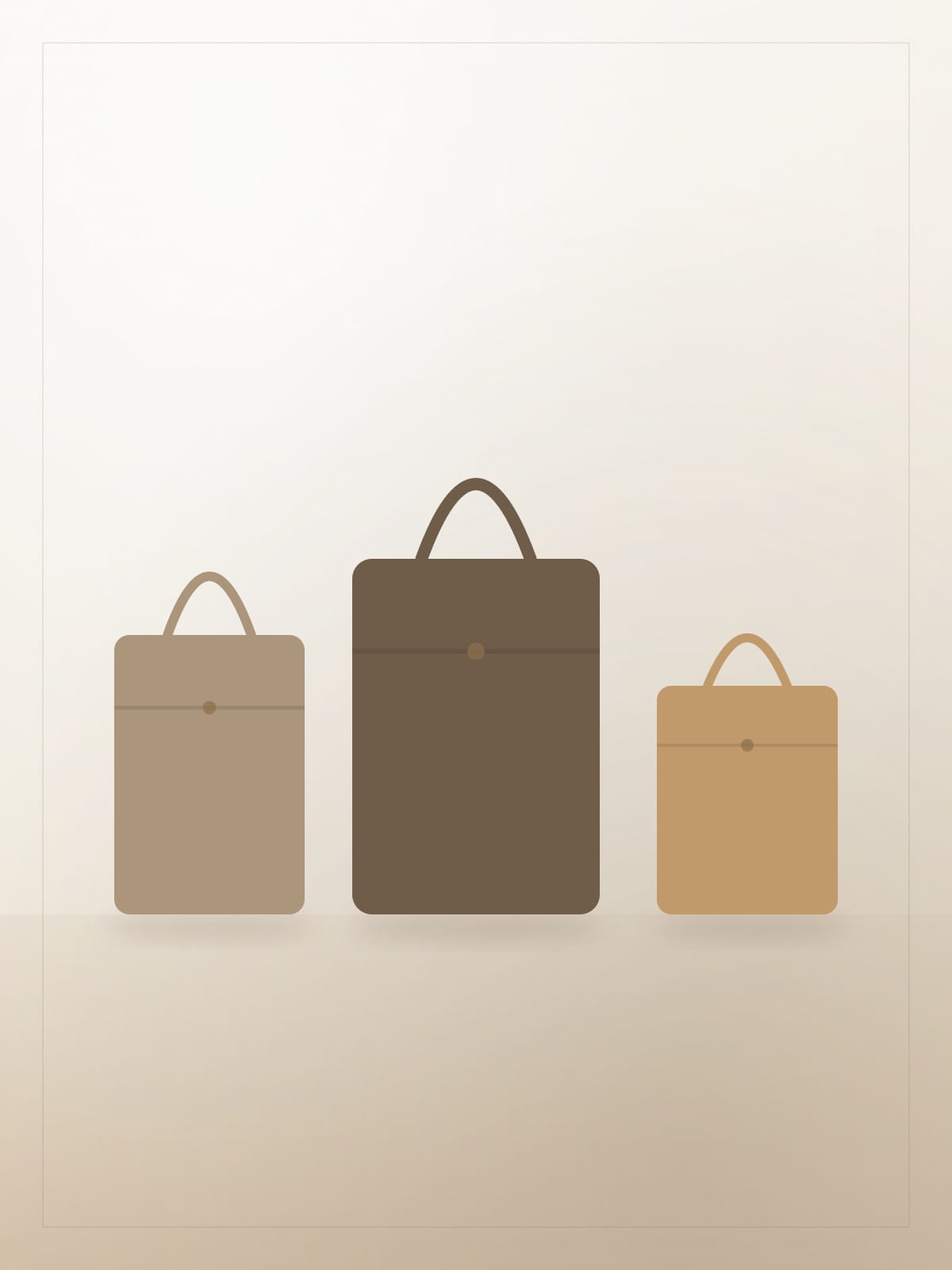
Bags multiply faster than any other accessory. They are the easiest thing to buy on impulse, they are rarely worn out, and they are almost never thrown away — which is how a minimal wardrobe ends up with eleven of them.
Three shapes cover the realistic range: a day bag, an evening bag and a bag for the days that need more.
1. The day bag
This is the bag you carry four or five days a week. It has one job: to hold a laptop, a notebook or both, plus the small things, without looking like luggage.
What matters:
- Structure. A bag that holds its shape reads as intentional. Soft totes collapse into shopping bags.
- A closure that works one-handed. Zips beat magnetic snaps when you are standing on a train.
- A strap you can wear two ways. Shoulder and cross-body covers commuting and errands.
- Weight when empty. A structured leather tote can weigh over a kilo before you put anything in it. Pick it up empty and imagine carrying it for an hour.
What does not matter: the number of interior pockets. A single zip pocket and a removable pouch beat eight compartments you cannot see into.
2. The evening bag
The bag for dinners, weddings and anything with a dress code. It needs to hold a phone, a card, a key and a lipstick — nothing else — and it needs to look deliberate.
- Size: small enough to hold in one hand, large enough for a modern phone. Check the phone against it before buying; this is the most common mistake.
- Shape: a clutch or a small structured top-handle. Avoid anything with a long chain that tangles in a coat.
- Colour: match your shoes or your darkest neutral. An evening bag in a novelty colour gets worn twice.
A practical compromise: a small bag with a removable chain. Clutch for dinner, shoulder strap for the walk there.
3. The travel bag
Not a suitcase — the bag that goes inside the suitcase, or replaces it for a weekend. Soft, light, and able to be squashed into an overhead bin.
- Material: coated canvas or a light nylon. Leather looks better and weighs more.
- Capacity: 25 to 35 litres. Enough for two nights, small enough to carry all day.
- One outside pocket. For the things you need at security.
What to ignore
- "Investment" bags. A bag is a tool. Buy it for the way you live, not for what it might be worth.
- Trend shapes. The bag that is everywhere this season is the bag that looks dated in three.
- Matching sets. Bag, shoes and belt in identical leather is a look from a catalogue, not from a life. Two of the three is plenty.
Leather, and what to do about it
Full-grain leather develops a patina and outlives most of your other possessions. Corrected-grain leather — the smooth, uniform kind — resists scratches and looks the same on day one and day one thousand.
Neither is wrong. Full-grain is for people who like evidence of use; corrected-grain is for people who want the bag to keep looking new. Bonded leather, which is shredded leather fibre glued together, is neither: it peels, and it is the one material worth refusing.
Care is simple: keep it dry, store it stuffed with paper, and condition it once a year with a neutral cream. That is the whole routine.
The count
Three bags. If you find yourself buying a fourth, the question is usually not "which bag" but "which of the three is failing". A day bag that hurts your shoulder, an evening bag that does not fit your phone — replace the failure rather than adding a workaround.
For the pieces these bags go with, see the 30-piece checklist, and for the other accessory worth spending on, how to choose a watch.
Read next
Guides that share this one’s wardrobe logic.
How to Choose a Timeless Watch Without Overpaying
Case size, movement, strap and dial — the four decisions that matter when buying a watch you intend to wear for twenty years.
Layering Fine Jewelry: A Simple Guide
Chain lengths, metals and proportions — a practical method for layering necklaces and rings without tangling, clashing or overdoing it.
Buying Leather Boots You Will Resole, Not Replace
Construction, leather type and sole attachment decide whether a boot lasts five years or twenty. What to check, and what it costs to fix later.